$ cat projects/groundwater-prediction/README.md
Groundwater Level Prediction
Undergraduate thesis at Brac University: monthly groundwater forecasts for 109 wells across Bangladesh's Barind Tract, checked against an independent monitoring network.
$ cat metrics.txt
- forecast error one month ahead (test RMSE)
- 1.06 m
- better than persistence, six months ahead
- 55%
- Nash–Sutcliffe efficiency
- 0.92–0.97
- monthly records, 2005–2021
- 109 wells
$ less about.txt
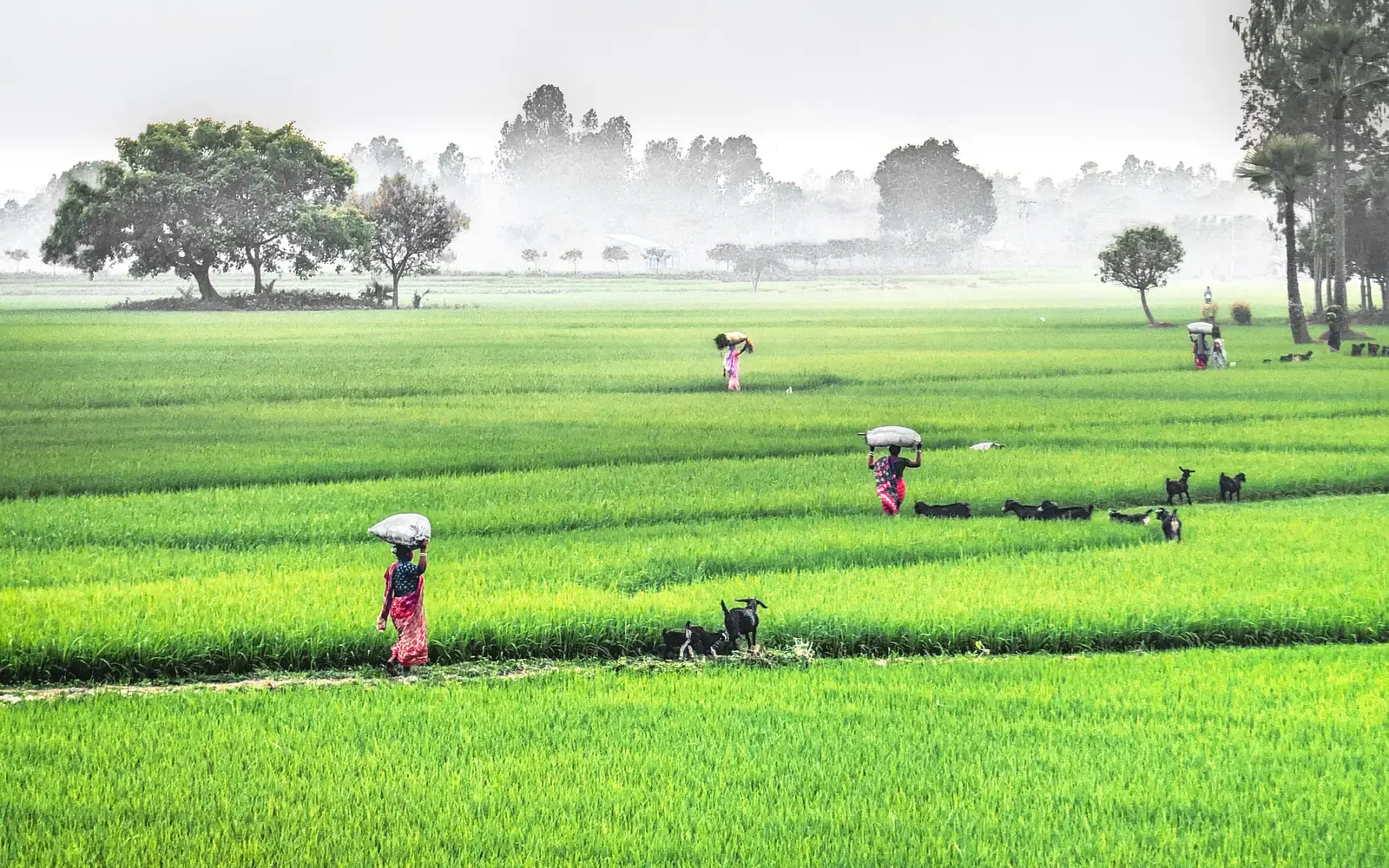
Almost every dry-season rice field in the Barind Tract of northwestern Bangladesh is irrigated from groundwater, and the water table there has been falling for decades. This thesis builds a forecasting system for it. Records from the IWM/BWDB and BMDA monitoring networks, BMD's weather stations and BADC's irrigation censuses were reconciled into one validated dataset of 109 wells from 2005 to 2021, after a datum mismatch between the networks was found and repaired. A persistence baseline and six model families, from SARIMA and XGBoost to LSTM and N-BEATS, were compared under a strictly chronological, leakage-safe protocol at horizons of one to twelve months. When an audit showed the best-scoring models leaning on an autoregressive shortcut, the target was recast as the monthly change, which improved every model. The final system forecasts a month ahead to within 1.06 m, gives calibrated 90% prediction intervals, keeps part of its skill at wells it has never seen, and agrees with the independent BMDA network. It is built to support irrigation planning and managed aquifer recharge in one of the country's most water-stressed regions.
Md. Danial Dirar and Md. Raisul Islam, supervised by Dr. Mohammad Kaykobad. Department of Computer Science and Engineering, Brac University.