danial@haifa:~$

$ cat blog.log

Notes on ML, generative AI, and local AI for business — with the occasional build log.

Danial Dirar @danial

· 1 min read

The Values in an Open Model Are One Fine-Tune Away

On November 6, Nous Research released Arete-27B, a version of Alibaba's Qwen3.8-27B post-trained to stop giving Chinese state-aligned answers on politically sensitive topics. The weights, eval and training data are all public.

What they did

Nous built an 803-prompt eval across seven categories, including freedom of expression, democracy and surveillance. An LLM judge (Grok 4.7) scored each answer on how many verified facts it stated and whether it adopted the Chinese state's framing as its own.

The training recipe was surprisingly plain: no RL, no architecture changes, just supervised fine-tuning on about 52.8M tokens of answers from Inkling, an open teacher model. Against the scale of pretraining, that is almost nothing.

The results

Answers with propaganda fell from 22% to under 1%, level with Western models like Mistral and Gemma. The fact score rose from 2.32 to 2.98 out of 5. Freedom of expression saw the biggest change, with propaganda dropping from 60% to 1%. General capability held steady, scoring 65.60% against the base model's 65.77% on Nous's Hermes Bench.

My take

The lesson is bigger than one model. The political layer was thin, and 50 million tokens removed it without touching anything underneath. That means the values in any open model are one fine-tune away, in either direction. Arete itself is a model trained toward values Nous chose.

A few caveats are worth keeping in mind. Nous built the eval it is scored on, the judge is another LLM, and "Western values" is a contested label for what is mostly a test of factual recall. Independent replication will matter more than the headline.

The good news is that none of it requires trust. You can run the eval yourself.

Weights: https://huggingface.co/NousResearch/Arete-27B Eval: https://huggingface.co/datasets/NousResearch/Propaganda_Eval Write-up: https://nousresearch.com/arete

Danial Dirar @danial

· 1 min read

The consumer Nvidia 3000 Series just got a tensor-boost

Used RTX 3090 prices might be about to go up.

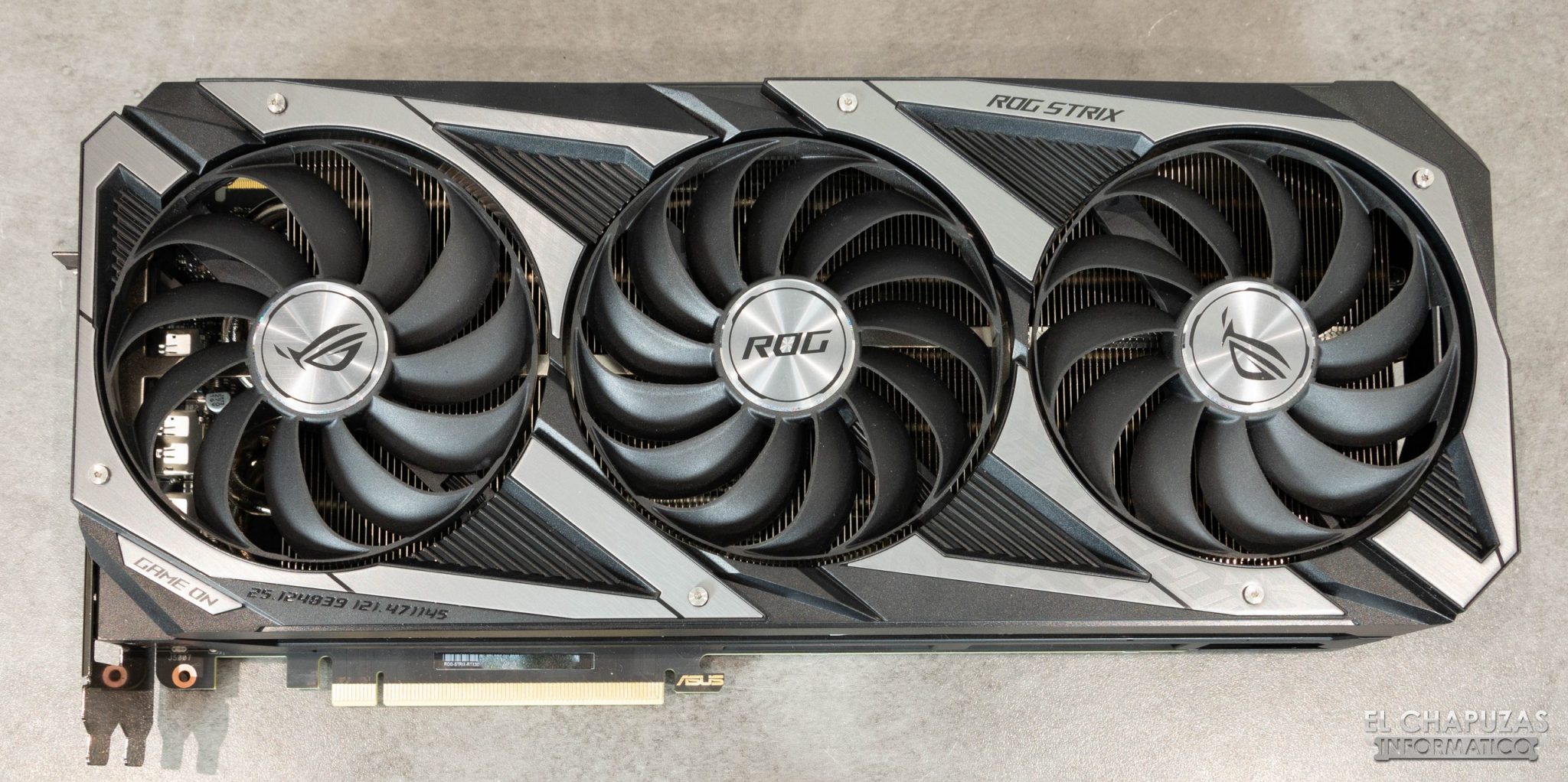
An open source project just unlocked the full FP16/BF16 tensor rate on RTX 30 series cards. Same card adn same power limit but up to about 80% more matrix throughput in reported benchmarks.

The trick is simple. A kernel module flips the speed registers at boot, before NVIDIA’s driver takes over. The stock driver stays as it is. Also you can most probably put it in the grub entry to avoid the hassle for each time boot. Oh and currently its for linux only.

I run local LLMs and image models on a 3090, so this one caught my attention. Prefill and diffusion get the boost. Decode stays memory bound, so don’t expect double tokens per second. I wonder how the modded 48gb 3090 would perform.

Worth a look: https://github.com/Zagitta/gpu-unlock

Danial Dirar @danial

· 1 min read

Human brain cells to run AI systems?

Companies have started using real human brain cells to run AI systems.

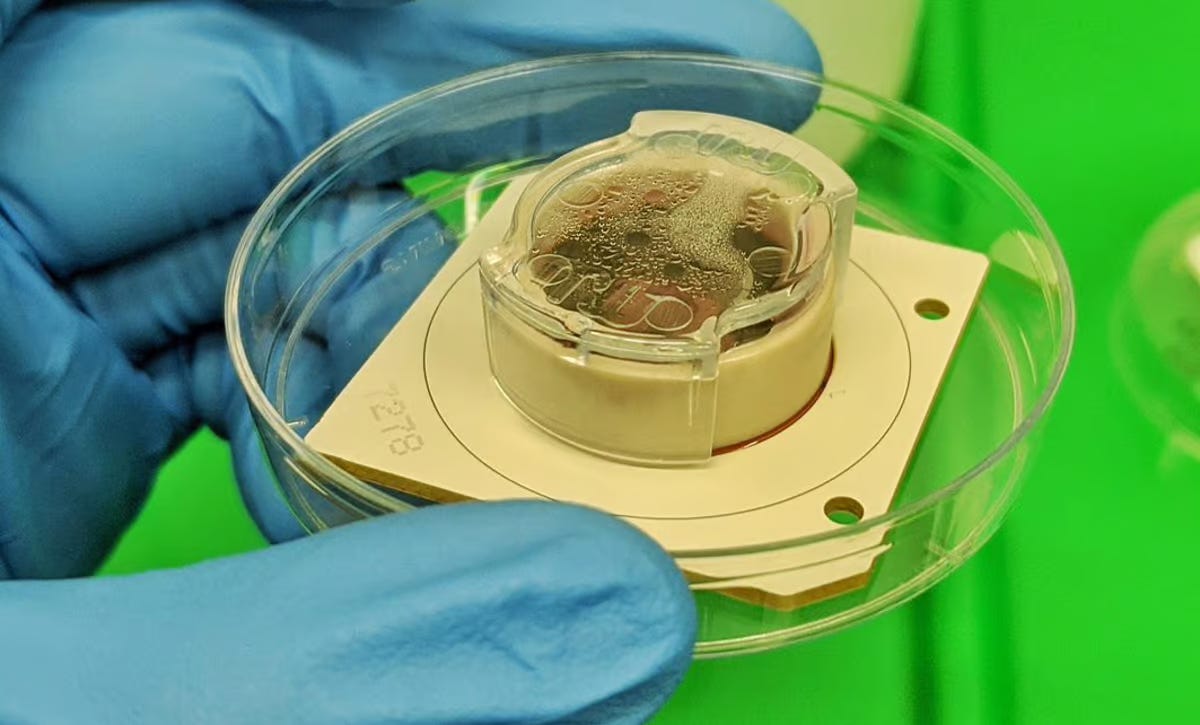
San Francisco-based biotech startup Parasma has officially launched its new biological computing infrastructure, which uses living human brain cells as an energy-efficient alternative to traditional GPUs. Founded by Sean Cole, who previously collaborated with Cortical Labs to train neurons to play the classic game Doom, the company is building hardware that bridges biology and artificial intelligence. Parasma's custom architecture works by converting context words into electrical stimulation delivered directly to lab-grown neural cells, measuring their biological responses, and decoding them into linguistic tokens. This bio-synthetic framework offers a completely new model paradigm, opening the door for programmable wetware to process human language.

In recent trials, Parasma demonstrated that human brain cells could successfully tackle language tasks, achieving an impressive 90% accuracy in next-token prediction using full-sentence contexts. More remarkably, during a complex, non-linear token prediction experiment, the biological cells reached 78.1% accuracy, surpassing the 75% performance ceiling of a standard silicon linear decoder. According to Cole, demonstrating capabilities that conventional silicon decoders cannot represent is a crucial step toward utilizing living neurons in language modeling. Ultimately, Parasma plans to establish repeatable benchmarks to scale biological computing, aiming for a future where racks of living human tissue could run highly efficient, adaptive AI systems. In other words, one day soon, our AI systems and data centers may be built of off infrastructure that depends on racks of living brain tissue.

source: Parasma. (2026). Parasma Launches to Train Brain Cells for Compute. Parasma Press Release. Link: https://parasma.com/news/human-brain-cells-do-next-token-prediction

Danial Dirar @danial

· 1 min read

hello, world — why this site exists

Welcome to my corner of the internet.

I'm Danial — a computer-science engineer from Dhaka. I spend most of my time on three things:

  • Machine learning — time-series forecasting, model benchmarking, research pipelines that hold up under scrutiny.
  • Generative AI — image and video pipelines that run on hardware I control.
  • Local AI for business — private assistants and RAG systems that never send a company's data to someone else's cloud.

This blog is where I write down what I learn while building. Expect build logs, honest benchmarks, and the occasional strong opinion about running AI on your own GPU.

$ git commit -m "first post"
$ git push origin main
# → deployed. see you in the next one.

Danial Dirar @danial

· 1 min read

Local AI for business: what I learned building HiveMind

Cloud LLM APIs are the easy path — until you meet a client whose data simply cannot leave the building. A researcher with unpublished results. A firm with client records. A hospital. That constraint changes the whole architecture.

Haifa HiveMind is a private, local research assistant I built for exactly that case: drop in your papers, ask grounded questions with citations, and everything — embeddings, retrieval, generation, fine-tuning — happens on one machine.

The stack that survived

After a lot of iteration, the shape that worked:

Electron / React UI
        │
FastAPI (local only)
        │
ChromaDB + SQLite  ──  Ollama (LLM + vision)
        │
QLoRA fine-tune loop (approved answers → training data)

A few lessons that generalise to any local-AI-for-business project:

1. Retrieval quality beats model size

On a single consumer GPU you can't brute-force with a 70B model. A well-tuned retrieval layer in front of an 8B model beat a lazy pipeline in front of a much bigger one, every time. Chunking strategy and citation grounding mattered more than parameter count.

2. Feedback is your fine-tuning dataset

Users reject bad answers anyway — capture it. Rejected answers trigger a re-think; approved answers become QLoRA training pairs. The assistant slowly bends toward how this user works, which no cloud API will do with private data.

# the loop, conceptually
if user.approves(answer):
    training_set.add(question, answer)   # future QLoRA pass
else:
    answer = rethink(question, feedback) # retrieval widened, prompt adjusted

3. Give the GPU an off switch

A business machine is not a server farm. Simple On / Pause / Off power controls — keeping the GPU busy only when someone is actually asking questions — did more for adoption than any benchmark number.


If your business is weighing cloud vs. local AI and the deciding factor is privacy, the local path is more practical than most teams assume. If you want help building one, reach out.